From 1998 to today
Photographs-
1998
It starts with Mr. Murray Dweck, who would occasionally attend an Ashkenaz synagogue on East 3rd Street on a snowy Friday night. Surprised to see that this minyan was half Sephardic, Mr. Dweck soon decided that there was a necessity for a new Syrian knis in the Gravesend area.
The idea immediately found its supporters, among them Maney Douek, who was enthusiastic about the project from the start. Although there were the usual difficulties of raising funds and obtaining a property, the project got off to a running start. By using his ingenuity in real estate to procure a lot, and with the help of Ezra Massry, who brought his family to start a daily minyan, Murray Dweck created a synagogue in the Syrian-Halabi tradition.
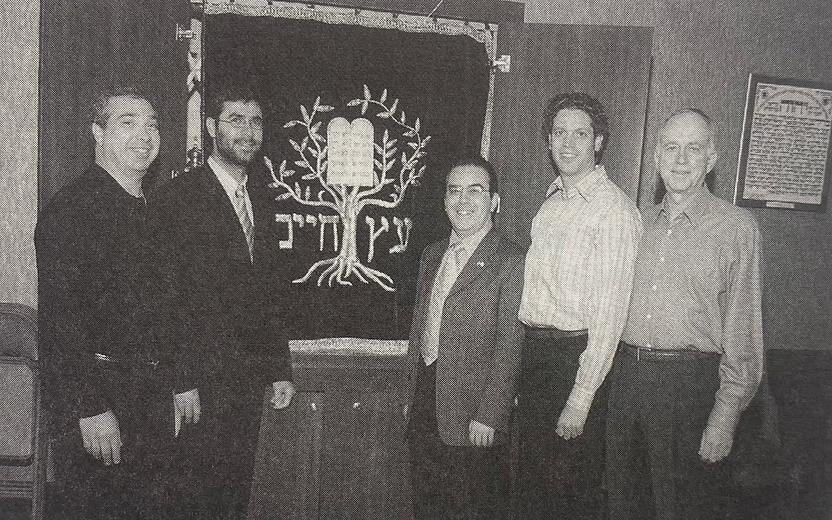
From left: Mr. Maney Douek, Rabbi Avraham Benhamu, Rabbi Nissim Elnekaveh, Mr. Eli M. Dweck, Mr. Murray Dweck. -
2001
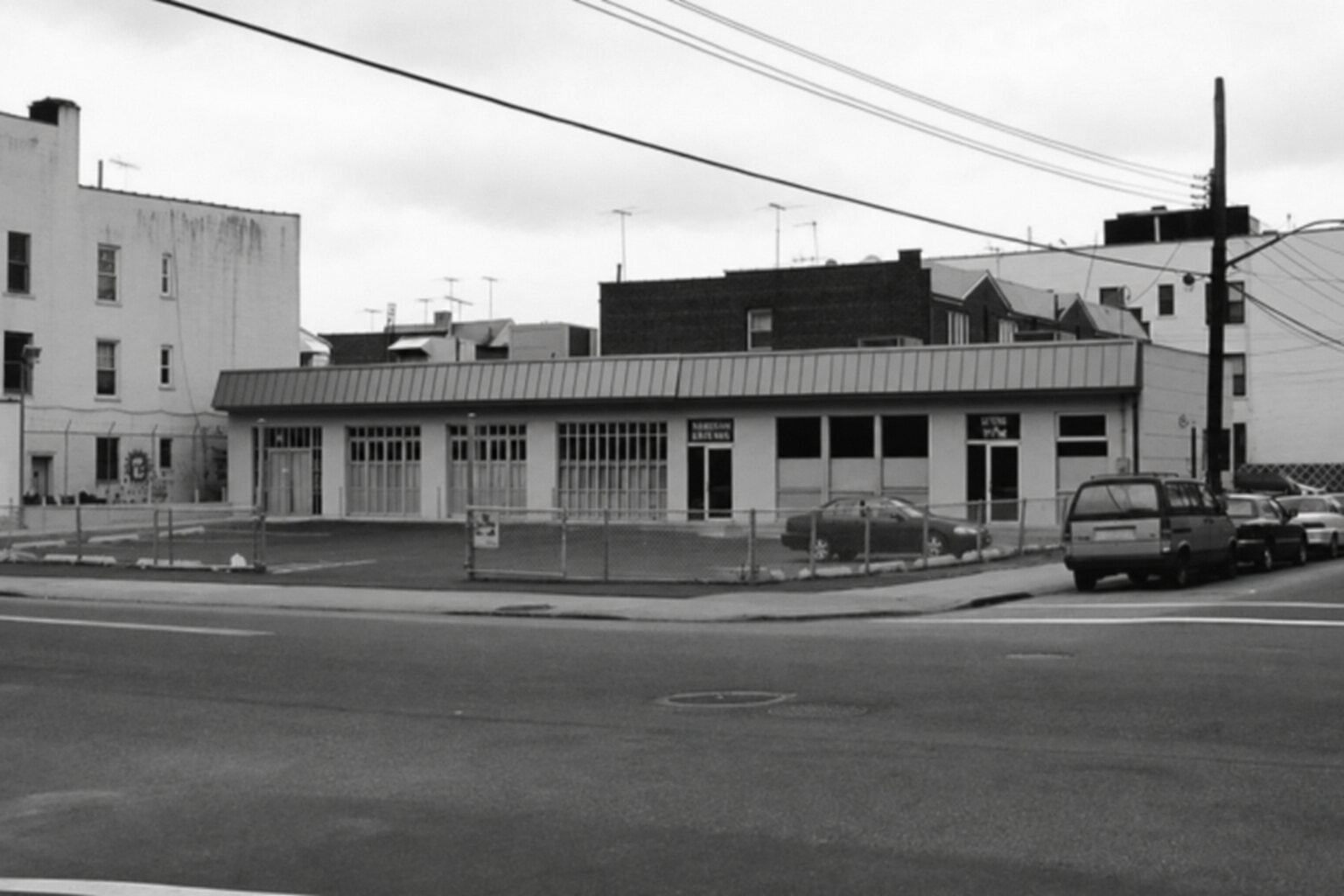
For decades, residents of Gravesend knew the building at the southeast corner of East 2nd Street and Avenue U as a place to gas up their cars. By 2001 the one-storey structure, its large glass-paned bays still recalling its automotive past, was Mikdash Eliyahu, and attendance had swelled from 40 congregants to more than 100 families.
Within a few years there was a need for a major expansion to fit all of the congregants.
-
The expansion
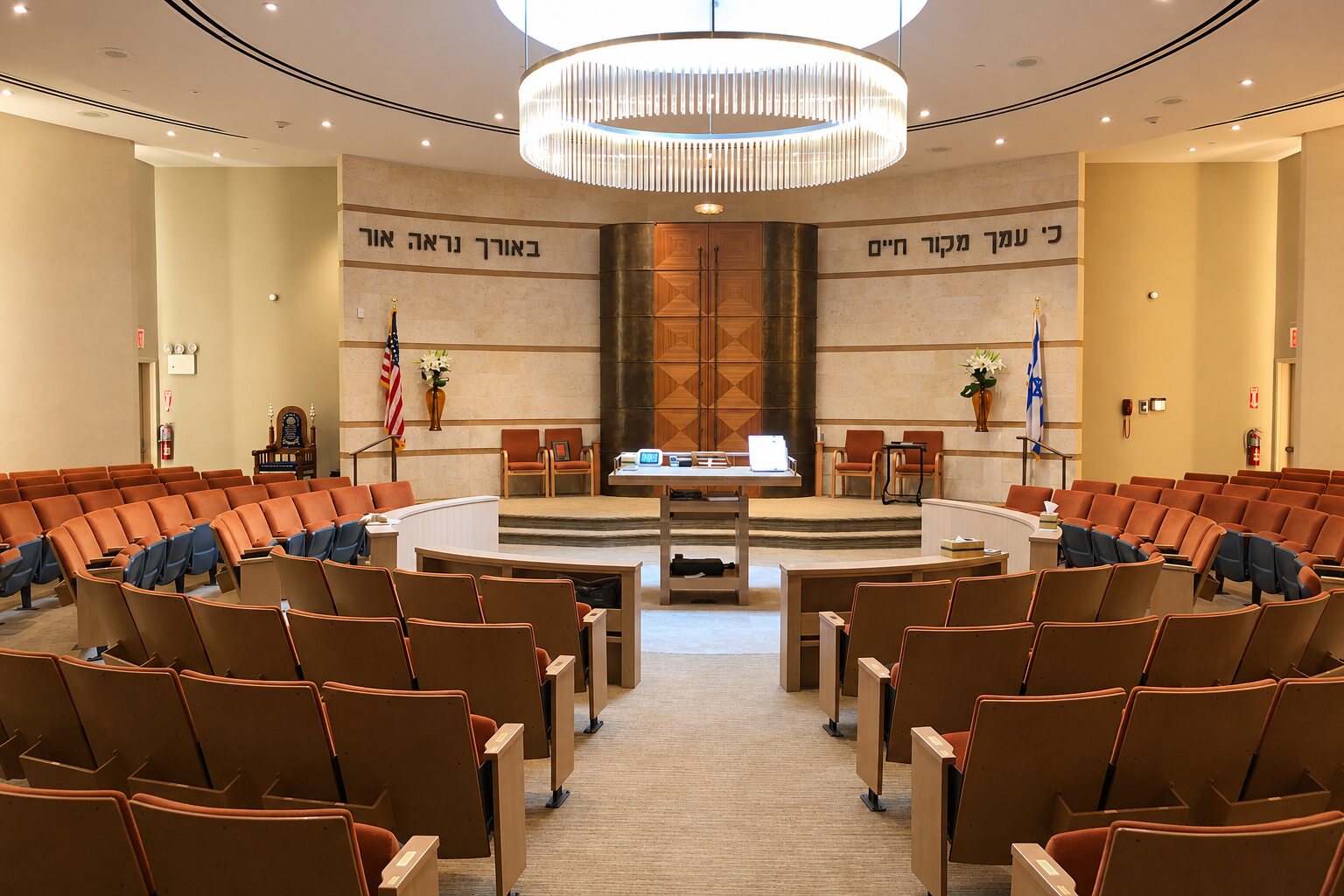
Murray Dweck’s plan was to build a structure more than triple the size of the original synagogue, with a luxury condominium above it: the sale of the condos would fund the expansion. The community responded with support for both, and the New York Times praised the ingenuity of integrating residential and religious edifices.
The new building follows a traditional design for Sephardic synagogues, with the teba in the middle of the house: “That’s the tradition in Italy, Greece and Spain as well as the Middle East,” said its architect, Stephen B. Jacobs. It is a tribute to the Syrian Jewish community, which dedicates itself to Torah while possessing unparalleled resourcefulness and creativity.
-
2022
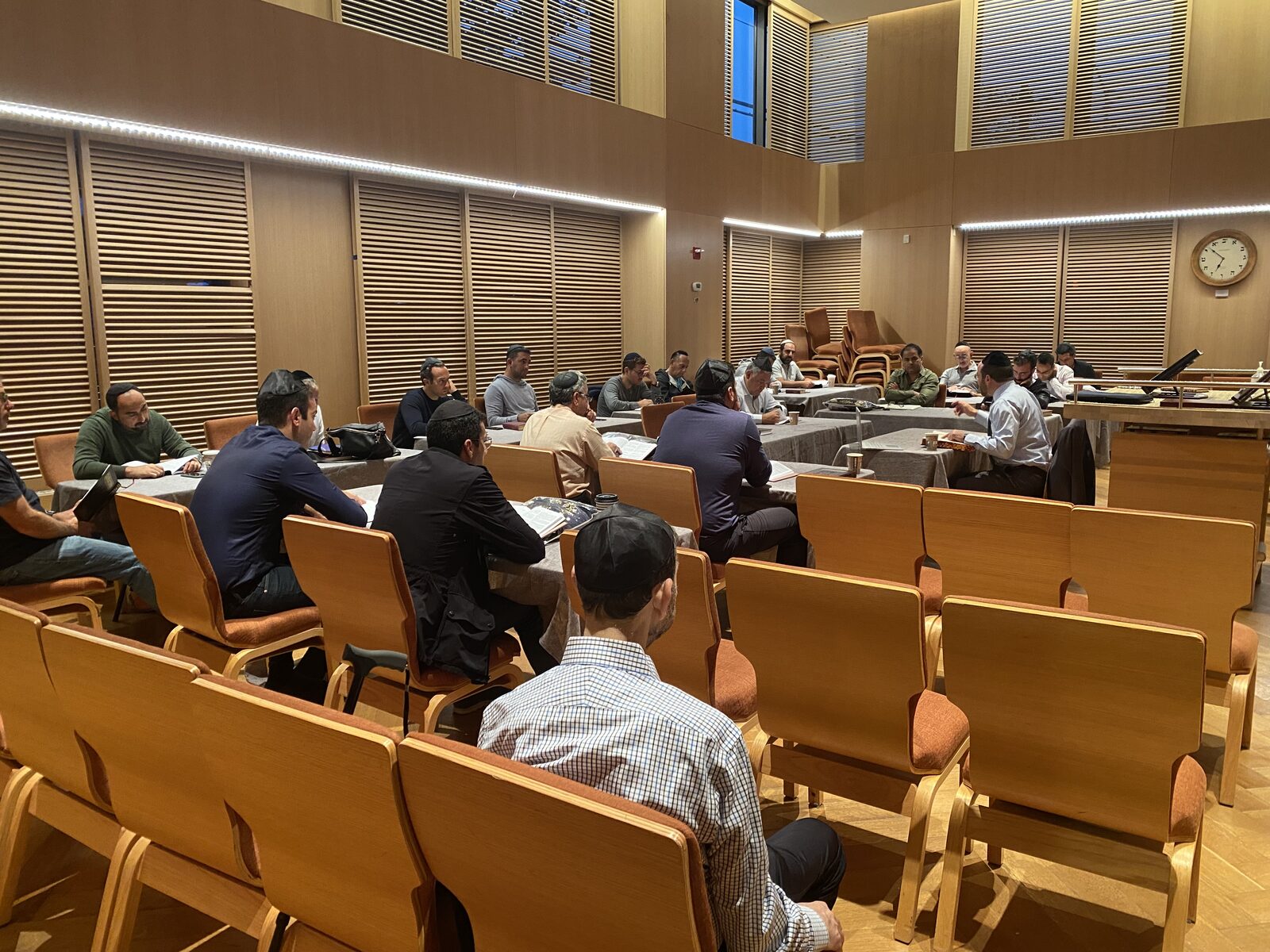
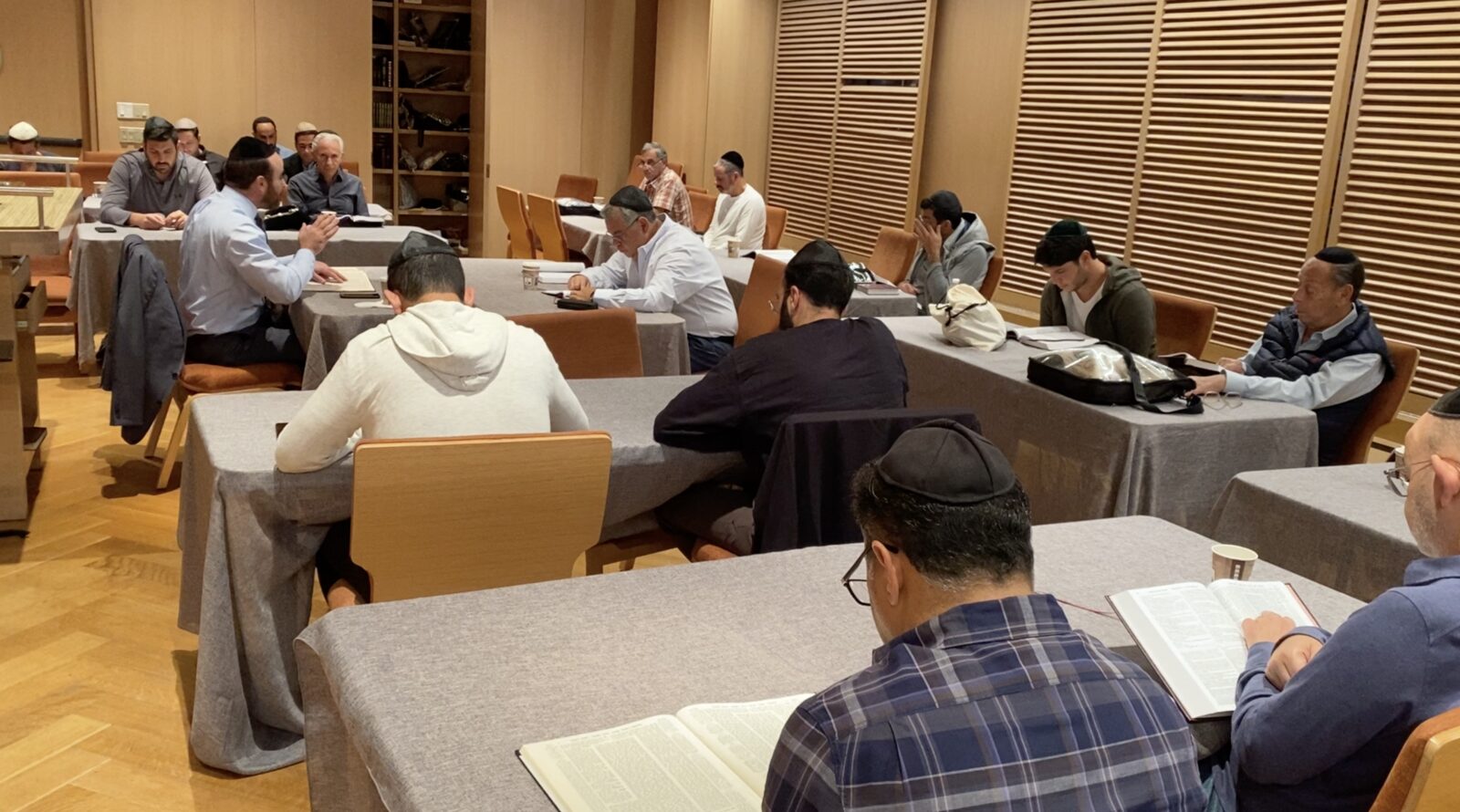
On January 3rd, 2022, the congregation celebrated a siyum of Masekhet Rosh Hashanah, the culmination of months of learning Gemara every morning with Rabbi Avi Harari. Over 20 of the close to 40 participants came for words of Torah, a dinner and a night together, sponsored by Jeffrey Gindi in memory of his father, Ralph S. Gindi A”H. Morris Catton taught the last passage of the Gemara.
“When Rabbi Avi Harari joined Mikdash Eliyahu family, one of our goals was to build upon our daily learning and to establish a daily Gemara class,” said the president, Eli Dweck. The class went on to Masekhet Sanhedrin.
-
Today
Under the leadership of Rabbi Dr. Raymond Harari, Rabbi Avi Harari and our president, Eli M. Dweck, Mikdash Eliyahu is home to hundreds of families, provides daily classes, has world-renowned hazzanim leading the Slah, a booming young adult minyan, an ever-growing father/son minyan, and a Shabbat girls program that attracts dozens. May we only see more growth in the future.